You Are Not Alone. Take a Deep Breath.
If you have just received an autism diagnosis for your child, stop and breathe. This diagnosis does not redefine who your child is—it gives you the roadmap, the language, and the tools to understand and support them.
What to Keep in Mind Today
Before jumping into appointments and therapy lists, anchor yourself in these foundational truths.
1. You Don’t Have to Fix Everything Tomorrow
There is no expiration date on supporting your child. It is completely normal to feel grief, relief, confusion, or overwhelm. Give yourself permission to feel all of it without guilt. Your child is still the exact same lovable human they were before the paperwork.
2. Connection & Regulation Come First
Before academic goals or compliance, focus on nervous system regulation and safety. A child who feels regulated, understood, and connected to their caregivers is in the best position to learn, explore, and thrive.
3. Presume Competence Always
If your child is non-speaking or speaks with gestures, sounds, or echolalia: non-speaking does not mean non-thinking. They understand far more than they can always express. Introducing AAC, picture boards, and visual supports empowers their voice.
4. Build Your Support Village
Advocating in isolation is exhausting. Connect with fellow parents who understand the daily reality without needing explanations. Hearing “we went through that too” is the most restorative medicine you can receive.
Your First Month Action Plan
Simple, high-impact steps you can take one week at a time without burning out.
Organize Documentation & Emergency Info
Gather assessment reports, paediatrician notes, and emergency contacts in one binder. Create a quick one-page child profile that teachers, sitters, and therapists can easily digest.
Introduce Visual Schedules at Home
Uncertainty breeds anxiety. Implement a simple visual morning and bedtime routine card strip so your child knows what comes next, reducing transition meltdowns.
Identify Sensory Triggers & Regulators
Observe what overwhelms your child (noise, bright lights, scratchy clothing) and what grounds them (deep pressure, spinning, swinging, quiet corners). Craft a sensory-safe home sanctuary.
Research Regional Support & School Accommodations
Look into your local legal entitlements—whether that's an IEP/504 plan in the US, an EHCP in the UK, NDIS in Australia, or special education grants. You do not have to pay out-of-pocket for everything alone.
Free Starter Guides to Download Right Now
We've built 16 practical, printable tools specifically designed for this phase. Start with these three essentials:
After an Autism Diagnosis: A Parent’s First Steps
A 6-page starting guide with practical next steps, communication/AAC foundations, health questions, school pathways, and a flexible first-month checklist.
Autism Emergency & Care Binder
An 11-page printable binder for emergency contacts, medical profiles, safety planning, sensory triggers, food preferences, and caregiver support plans.
Visual Schedules: My Day, One Step at a Time
A colourful 20-page A4 pack with 6 ready-made routines, 48 activity cards, build-your-own strips, and photo-friendly blanks to reduce transition distress.
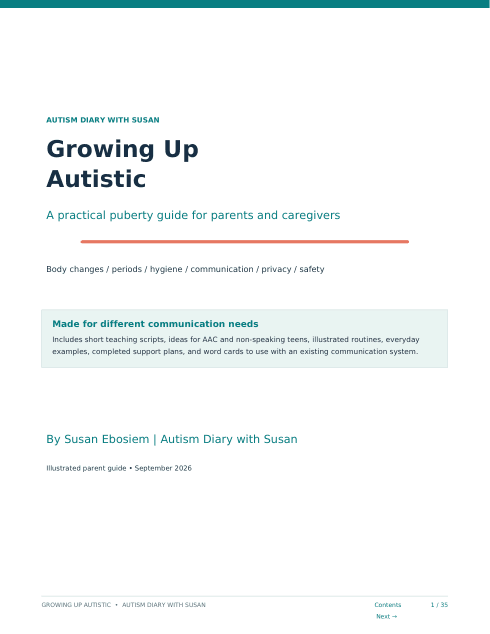
Growing Up Autistic: A Practical Puberty Guide
By Susan Ebosiem • Autism Diary with Susan • 35-Page Comprehensive Illustrated Guide
While our free printables cover immediate routine and emergency needs, growing up presents deeper, complex questions. This complete 35-page handbook prepares parents and caregivers to guide their children through physical, emotional, and sensory transitions with dignity, confidence, and compassion.
Stay Connected With Our Village
Every week, Susan shares practical stories, printables, and honest reflections on parenting across the autism spectrum.